For audiologists and hearing aid practices
Audiology marketing software and hearing aid practice marketing software with prices
AiMarketer runs the marketing a hearing practice never has a free hour for: search ads on hearing tests in your towns, reactivation emails to patients fitted years ago, review requests after a fitting, and referral letters to local physicians. Each piece is written in your practice's voice and launched only after you approve it.

The agent drafts a real starter campaign for your business: the angle, three ads, a five-post calendar and a budget split. One free run, about 30 seconds.
You have had your free run here. Create your account and the agent writes you a full 90-day marketing plan for your business.
Campaign for . Describe your own business above to run yours.
Campaign angle & audience
Ready-to-run ads
Suggested budget split
First week of content
This is a live generated draft. Want AiMarketer to actually launch and optimize it for you? Describe your business above to run this on yours, or have AiMarketer launch and optimize the campaign for you. You have had your free run on your own business. Create your account and the agent writes you a full 90-day marketing plan for it.
No card required for the demo. Nothing goes live without your approval, and every approved ad and email is logged.
The short answer
Audiology marketing software comes in three kinds. Hearing office management systems with marketing add-ons cost $97 to $495 a month for one clinic. Texting and review tools start at $199. An AI marketing agent writes and launches the ads, reactivation emails and posts for $49 to $499 a month.
The first two send what you set up once. Neither writes the hearing test ad for the new location, the letter to the family doctors in town or the email to patients whose devices are five years old. That weekly production is the part an agent covers.
Prices were read on each vendor's own US page. Vendors that only quote are named without a number.
What a pair of hearing aids sells for, by channel
Average price paid per pair, US buyers surveyed in 2025.
Clinic, no insurance
$4,727
Private practice average
$3,601
Clinic, with insurance
$2,567
Costco
$1,674
Over the counter
$502
HearingTracker price survey, 879 US pair purchases with a reported price. A practice cannot win the bottom two rows on price, so its marketing has to sell the testing, fitting and follow-up care.
What hearing aid marketing software costs a month
Seven published prices, read on the vendors' own pages. The first two are the system you schedule, bill and track devices in. The next three message the patients you already have. GoHighLevel is a general marketing CRM that agencies resell to hearing practices. Ad spend is extra in every row.
Hearing office management
amplifyOMS
$97 to $495
A month for the first clinic. Each extra full-time clinic adds half the base, extra providers are $25 each. Two-way texting, email and recall workflows sit in the $495 Premium plan. No setup fee, month to month, 60 days notice.
Hearing office management
CounselEar
$249.99
A month per location. Marketing automation $39.99, two-way texting $19.99, online reviews $79.99 and call tracking $9.99 a line are add-ons on top.
Texting, reviews and phones
Weave
From $199
A month on the entry plan. The higher plans are priced on request, and the unit is not stated.
Patient texting platform
OhMD
From $300 to $500
A month, for the Core plan and the AI and Automation plan. Calling usage is billed separately on the higher one.
Secure messaging per user
Spruce Health
$24 to $49 a user
A month, plus a one-time $19.50 texting registration fee. A business associate agreement is included.
General CRM and funnels
GoHighLevel
$97 to $497
A month, plus a $297 a month HIPAA add-on, which a practice that texts patients will need.
AI marketing agent
AiMarketer
$49 to $499
A month. Writes and launches hearing test search ads, reactivation emails, review requests, referral letters and posts after you approve each one.
Quote only, so not in the table: Sycle, Blueprint OMS, Auditdata Manage, TIMS, Podium, Birdeye, Solutionreach, Demandforce, Suno and IriScale's audiology plan. Blueprint publishes prices only for the UK and Ireland, in pounds and euros, and TIMS figures on review sites are not from the vendor, so we left both out rather than guess.
Read the unit before the number. amplifyOMS charges the base again at 50 percent for each extra full-time clinic, so three full-time clinics on Premium come to about $990 a month before extra providers. CounselEar's marketing tools are four separate add-ons, which together add about $150 a month to each location. GoHighLevel looks cheap until the $297 HIPAA add-on lands on top of every plan.
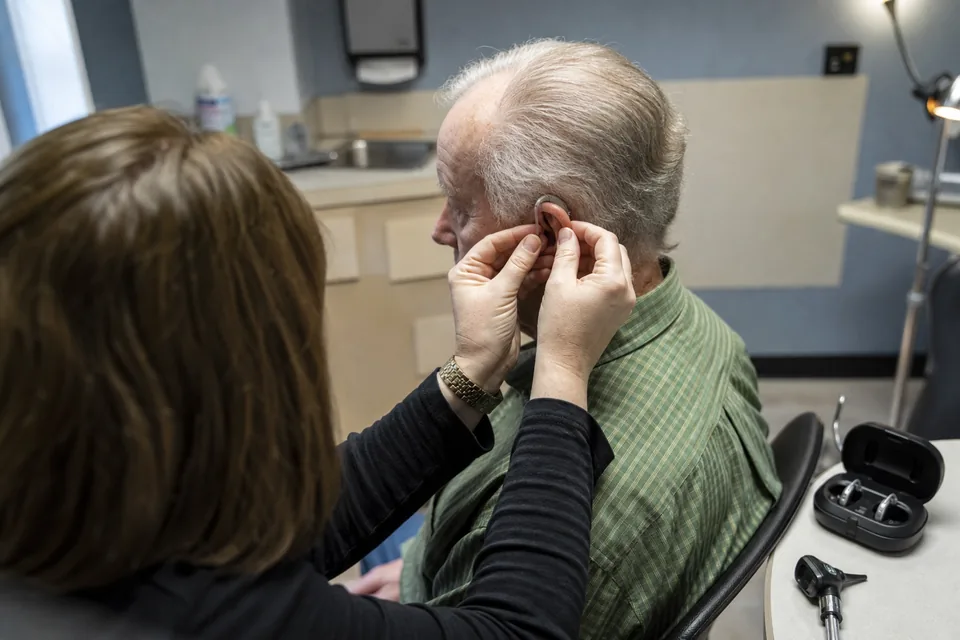
One fitting pays for a year of software
The Bureau of Labor Statistics counted about 14,200 audiologist jobs in the US in 2025, many in practices with one or two clinicians where the front desk also runs the marketing. Hearing aid dispensers and specialists work alongside them in thousands more clinics.
In HearingTracker's survey, buyers at private practices paid about $3,601 a pair on average. Hearing Review puts lead generation at $400 to $1,000 per new patient. Our Growth plan costs $1,788 a year, so one extra fitting covers it about twice over, before batteries, service plans and the second ear years later. That division is ours. Your own close rate on hearing evaluations will give a sharper figure.
The cheaper patient is the one you already fitted. Devices are usually replaced after several years, and a practice that never writes to its past patients loses that upgrade to whichever clinic or warehouse store advertises first. Running the search ads yourself? AI for Google Ads shows what Google automates and what still needs a person, and affordable PPC management lays published management fees next to the ad spend they sit on.
Hearing practice marketing, run every week
Tell it once about the practice: the audiologists and dispensers and their licenses, the towns you draw from, the insurance and benefit plans you accept, the services you want more of (tinnitus care, cochlear implant evaluations, custom hearing protection) and the claims you never make. Every draft starts from that brief.
01
Hearing test search ads
Ads on "hearing test near me", "hearing aids" and your town names, sent to a page with the clinicians, the plans you accept and online booking. One service per campaign, so you see which one books.
02
Reactivation emails
A short sequence to patients fitted four or five years ago and to people who had a test but never bought, sent only to those who agreed to hear from you, through a tool covered by your BAA.
03
Physician referral letters
A plain letter and a follow-up for the family doctors, ENTs and senior living directors in your area, saying what you test for and how fast you can see their patients.
04
Review requests
A message after each fitting and follow-up visit, sent the same way to every patient, with no gift tied to a rating and no reply that confirms someone was a patient.
05
Service pages and ads
Tinnitus, cochlear implant candidacy, hearing protection for musicians and hunters. Each gets its own ad group and a plain-English page, because these people search by problem.
06
Community and seminar invitations
The post, email and local ad for a hearing health talk at the library or a senior center, written so the invitation is the offer, not a "free hearing aid" claim.
-
1
It drafts
The month's ads, emails, letters and posts, each with audience, budget and dates.
-
2
You approve
Edit a line or approve it. Approved work goes out through the accounts you connect.
-
3
It reports
Every Monday: spend, calls and booked evaluations from ads, and what it changed.
Hearing aid advertising rules the software has to respect
A hearing practice sells a medical device, so its ads answer to the FDA, the FTC, HIPAA and a state dispensing board. Most rejected ads and most complaints come from a few patterns. These go into the blocked claims list on day one.
FDA over the counter rule
21 CFR 800.30, effective October 2022
Adults with perceived mild to moderate hearing loss can buy OTC hearing aids without an exam or fitting. Prescription devices still cover severe loss and anyone under 18. Ads should not blur the two or imply an OTC device replaces a fitting for every patient.
FTC on free and Medicare claims
FTC warnings and settlements
The FTC warned sellers in 2020 over "free hearing aids" ads tied to stimulus payments, and has settled with sellers whose ads implied Medicare pays for hearing aids. A free offer has to be truly free, and coverage claims have to match the patient's actual plan.
State dispenser rules
California, New Hampshire, Minnesota
Since April 2025, California ads must show the business address and the names and license numbers of dispensers at that location. New Hampshire requires mailed free hearing test offers to say they come from a dispenser or audiologist. Check your own board.
Google Ads
Health is a sensitive category, so remarketing lists, Customer Match and similar audiences are off for hearing care. Search keywords still work.
Meta
An ad cannot assert or imply something about the reader, including hearing loss. "Struggling to hear?" gets rejected. "Hearing tests in Tulsa this week" runs.
Patient stories
A patient's name, photo or story in marketing needs a signed HIPAA authorization. A reply to a review should never confirm a visit.
Reviews
The FTC rule at 16 CFR Part 465 bans fake reviews, bought reviews and suppressing bad ones. Ask every patient the same way.
A planning summary, not legal advice. Read your state board's advertising rules and have a health care attorney review any offer or testimonial before it runs.
Which hearing practices this fits
Owner audiologists
You test and fit all day, and marketing is a postcard twice a year. Your office system sends reminders and nothing else goes out.
Practices leaving an agency
You paid a retainer for a website and some ads and want the weekly work without a fee larger than the ad budget.
Practices with two to five clinics
Each clinic gets its own towns, clinicians, budget and approver, with one report across them. Scale covers up to 15 locations.
Dispensers opening a new clinic
No patient list to reactivate yet, so hearing test search ads, the Google profile and physician letters come first.
If you want a new website, direct mail and a strategist on the phone each month, a hearing care marketing agency is the right buy, and audiology marketing agency pricing lists what the firms that publish a fee charge. If the plan is clear and the weekly work is what never gets done, software is cheaper and faster to start.
Which plan
Starter at $49 a month runs one clinic on one channel, usually hearing test search ads or the reactivation and review emails. Growth at $149 runs ads, email and social together with budget optimization, which is where most practices should start. Scale at $499 covers up to 15 clinics, each with its own approver.
What we are not: an office management system, a scheduler, a device inventory or a texting platform. Keep Sycle, Blueprint, CounselEar or whatever you book in. The agent works through the ad, email and social accounts you connect.
AI marketing agent
Get next month's hearing test ads and reactivation emails drafted this week
Create your account. We will email you a 6-digit code to confirm, and you are in.
No card required. Your data stays yours.
Questions about audiology marketing software
How much does audiology marketing software cost?
Audiology marketing software costs $97 to $795 a month on the prices vendors publish. amplifyOMS runs $97 to $495 for the first clinic, CounselEar is $249.99 a location plus marketing add-ons from $9.99, Weave starts at $199, and GoHighLevel is $97 to $497 with a $297 HIPAA add-on. An AI agent that writes and launches the campaigns costs $49 to $499.
What is the best marketing software for an audiology practice?
The best marketing software for an audiology practice depends on the job. Recalls, appointment reminders and review requests usually live in the office management system, such as Sycle, Blueprint, CounselEar or amplifyOMS. Getting hearing test ads, reactivation emails and posts written and launched every week is a different job, and that is where an AI marketing agent fits. Most practices need one of each.
How do audiologists get more patients?
Audiologists get more patients from four sources worked every week: search ads on "hearing test" and "hearing aids" plus the town name, a Google Business Profile with steady reviews, referral letters to local physicians, and reactivation messages to patients fitted years ago. The patient list is the cheapest of the four, because those people already trust the practice.
How much should a hearing aid practice spend on marketing?
Hearing Review authors put a typical hearing practice marketing budget at 5 to 10 percent of revenue, and an ASHA Leader column suggests 8 to 10 percent. Hearing Review also puts lead generation at $400 to $1,000 per new patient. Against a private practice average of $3,601 a pair, that is affordable if the patient buys.
Can it help us compete with Costco and big-box hearing?
Not on price, and it should not try. HearingTracker survey buyers paid about $1,674 a pair at Costco against $4,727 at a clinic without insurance. A practice wins on testing, fitting and follow-up care, so the campaigns sell the audiologist, the appointment and the aftercare, and send people to book a hearing evaluation rather than compare device prices.
Can hearing aid practices run Google remarketing ads?
No, not with their own lists. Google treats health as a sensitive interest category, so advertiser-curated audiences such as remarketing lists, Customer Match and similar audiences cannot be used for hearing care ads. Search ads on hearing test and hearing aid keywords, and Google's own predefined audiences, are still allowed.
Does audiology marketing software need to be HIPAA compliant?
Any tool that stores or sends patient information on your behalf needs a signed business associate agreement, including a texting or email tool fed from your patient list. GoHighLevel sells HIPAA as a $297 a month add-on, and Spruce includes a BAA. Ads to the general public use no patient data, so the ad platforms are not part of the BAA question.
Related reading
Other care practices face the same mix of ad platform and board rules: optometry marketing software, chiropractic marketing software, physical therapy marketing software and home care marketing software price their tools the same way. Hearing groups with several clinics should read franchise marketing software, and Facebook ads automation covers what can safely run on its own. Every industry we cover is on use cases.